Mory’s Journey to Leave Big Cypress
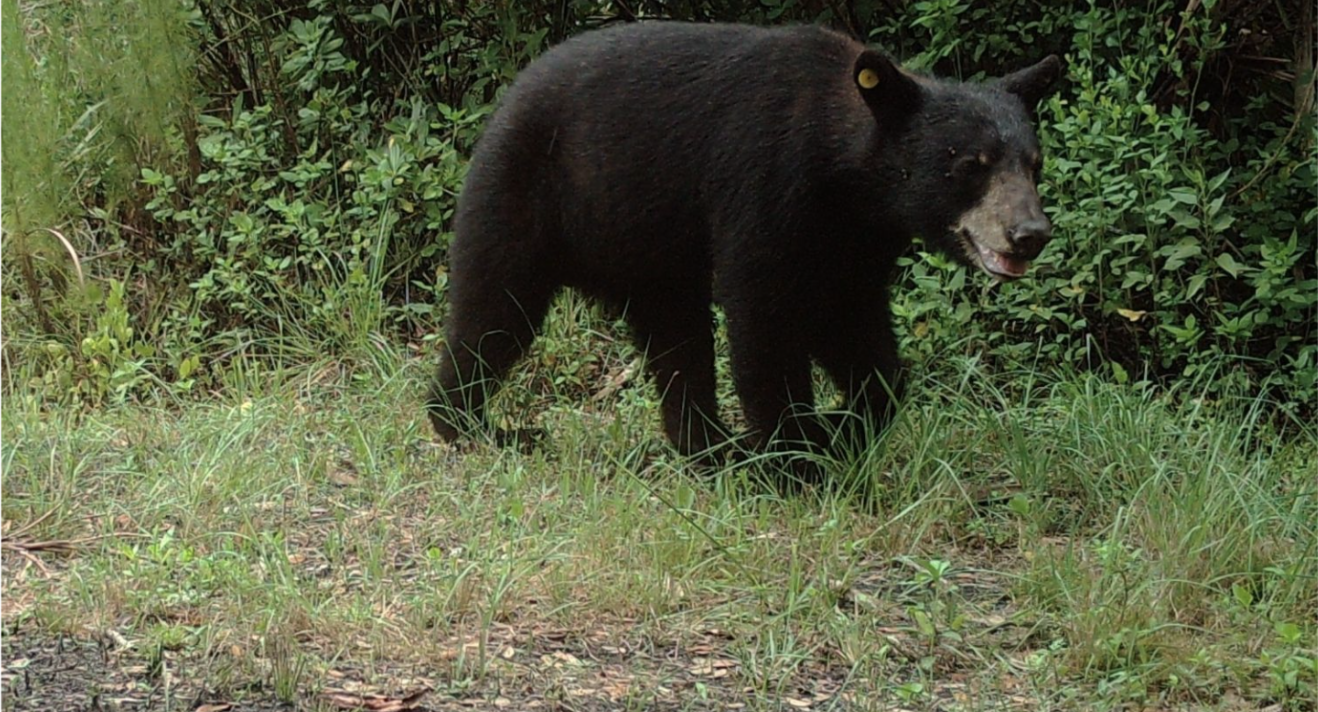
“Mory,” also known as M134, is a young male black bear being tracked by the Florida Fish and Wildlife Conservation Commission. Credit: FWC
Florida’s black bears face a new world divided by roads, development, and state-approved hunts.
In August 2025, the Florida Fish and Wildlife Conservation Commission (FWC) approved the state’s first bear hunt in a decade. In December, hunters killed 52 black bears in 23 days.
Before hunters loaded their guns and set traps, before arrows flew and dogs hit the ground running, before protests and lawsuits, Florida black bears were just wandering the state, looking for fruit and veggies.
One of those bears, tracked as M134 by the state – “Mory,” for this article – is from Big Cypress in Everglades National Park. The water runs slow and murky across this vast South Florida swampland of nearly 729,000 acres, where a bear can eat saw palmetto and tupelo berries, raid alligator nests and sleep through the hottest part of the day.
Big Cypress is where Mory learned what it meant to be a Florida bear in the twenty-first century: always hungry and running out of room.
Recovery into range
Florida’s bears exist in seven groups scattered throughout the state.
The largest groups — including Big Cypress, Ocala, and Apalachicola — act as source populations for smaller ones such as Highlands/Glades, Chassahowitzka, and Eglin, dispersing bears outward to bolster and diversify smaller populations.
In the 1970s, fewer than 300 black bears roamed Florida. Since then, FWC’s census data show conservation efforts helped recover populations up to 4,000 individual bears.
But bear ecologists are concerned these numbers are declining again, with several bear subgroups containing fewer than 200 individuals, a key number for assessing population health. If a subgroup dropped below 200, the bears are vulnerable to being wiped out by a single disease outbreak or sudden changes to their habitat.
“(The FWC is) managing them as if they are totally isolated from each other, and that’s just not true,” said Darcy Doran-Myers, a wildlife ecologist formerly with the FWC.
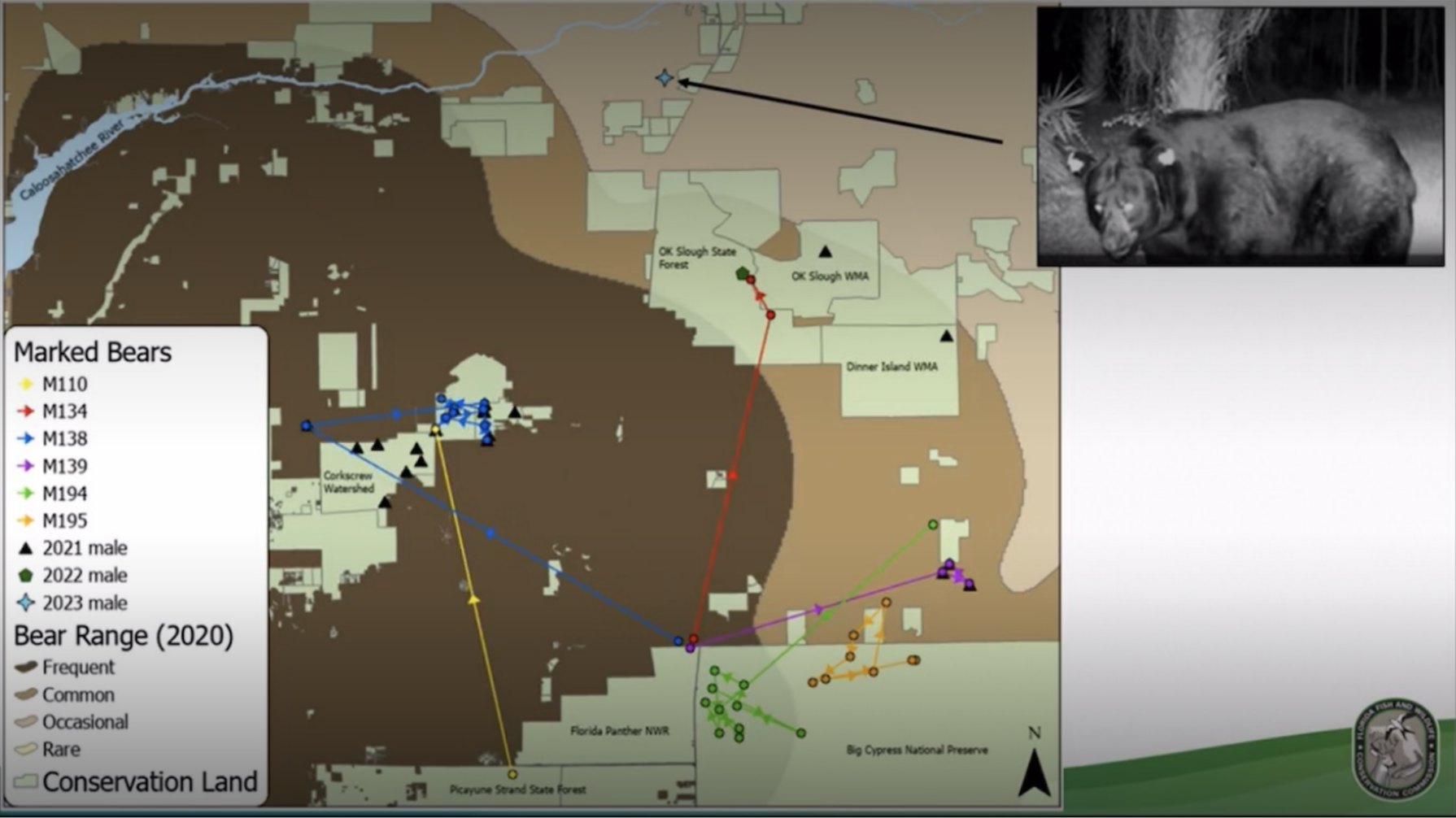
A map using bear-tracking data from a project started in 2021, which was presented in a September 2025 annual report. Credit: FWC
Organizing a hunt
Human construction and expansion throughout Florida has shrunk bear habitats. Some groups of bears have disappeared completely.
Florida’s black bears mingle across different subpopulations, a process ecologists call immigration, and one that is essential for smaller bear communities. The 2025 hunt targeted larger populations such as Big Cypress that serve as sources for smaller groups. Smaller subpopulations could not be targeted during the hunt.
“By hunting the large subpopulations, you’re reducing the immigration rate into the small subpopulations, the ones that need more bears,” Doran-Myers said.
Despite concerns about dwindling bear populations, the agency whose job it is to protect Florida wildlife decided to set quotas, doll out tags, and axe check stations that reviewed hunters’ methods and kill numbers during the 2015 hunt.
The 2025 hunt targeted larger populations such as Big Cypress that serve as sources for smaller groups such as the one in Highlands/Glades — a community too small and too isolated to hunt.
The Highlands/Glades area is patches of pine flatwoods and palmetto prairie in need of a new bear. After a 22-mile journey from the core of Big Cypress, Mory reached its northern edge, but did not cross into the smaller Highlands/Glades habitat beyond.
Even though hunting in Highlands/Glades was prohibited, by opening season in larger populations such as Big Cypress, wildlife officials threatened the entire interconnected network that keeps all Florida bears alive.
“Movement between subpopulations is what keeps small subpopulations alive,” Doran-Myers said. “Without it, a place for bears in areas like Highlands/Glades would disappear.”
Monitoring M134
Mory’s distant ancestors first settled in Florida toward the end of the Pleistocene Epoch during the last ice age roughly 12,000 years ago. As the peninsula’s wildlife became geographically isolated from mainland populations over time, Florida’s bears underwent significant genetic shifts. These lineages diverged enough to create a distinct subspecies: the Florida black bear (Ursus americanus floridanus).
In Florida, bears can eat all year round. No serious winter season means bears have constant foliage without the need to stock up and hibernate. Mother bears will den to have their cubs, but most other bears stay awake and active ––they just hunker down for a few days when it gets chilly.
Mory was born in the winter, blind and tiny. Florida black bears such as Mory have distinctively elongated and narrower skulls compared to their northern counterparts. Their fur coats are black or shades of brown often with white tufts of fur known as chest blazes.
After 16-18 months, black bears become independent, and at that age Mory headed north on a year-long journey in search of open territory. Mory was looking for his own stretch of woods where he could eat and rest without being run off by people or other bears.
For a young male bear such as Mory, traveling in search of new territory is one of the riskiest times of his life. He isn’t looking for trouble, just space, but he has to cross through vast stretches of development where he risks being hit by a vehicle or drawn into human neighborhoods by unsecured trash cans.
But hunting isn’t the primary cause of bear deaths — vehicles are. When bears accidentally wander into human neighborhoods, they’re in more danger than the people who live there. As Florida urbanizes at breakneck speed, bears and other wildlife such as the Florida panther are struggling to navigate the transformed land. According to the FWC, more than 200 bears are killed on Florida roads annually.
“Most bears who get hit by cars are traveling between communities,” Doran-Myers said.
Despite their road mortality numbers, hunting is often proposed as a solution to ease run-ins between bears and people. Organizations such as the Florida Wildlife Corridor have been advocating for alternatives such as increased bear habitat by connecting “corridors” of wild or agricultural lands throughout the state. Advocates say wildlife corridors will help both bears and people.
The FWC bear management plan suggests the state set aside money to purchase land for these corridors so bears such as Mory can travel safely and actually reach habitats that need new bears. If Mory is hit by a car leaving Big Cypress or shot before he could even make it out, his journey would end before it begins. Why Mory stopped at the edge of Big Cypress is unknown. Perhaps he found a suitable home there, or the fragmented landscape made further crossing impossible. The hope for ecologists such as Doran-Myers is to safeguard bears’ travels in the future.
“The No. 1 goal is to connect all of the seven bear subpopulations together so that they do function as a network across Florida,” Doran-Myers said.
This story was originally edited by News Watch mentors Yacob Reyes and CD Davidson-Hiers.