A Sky Full of Uncertainty
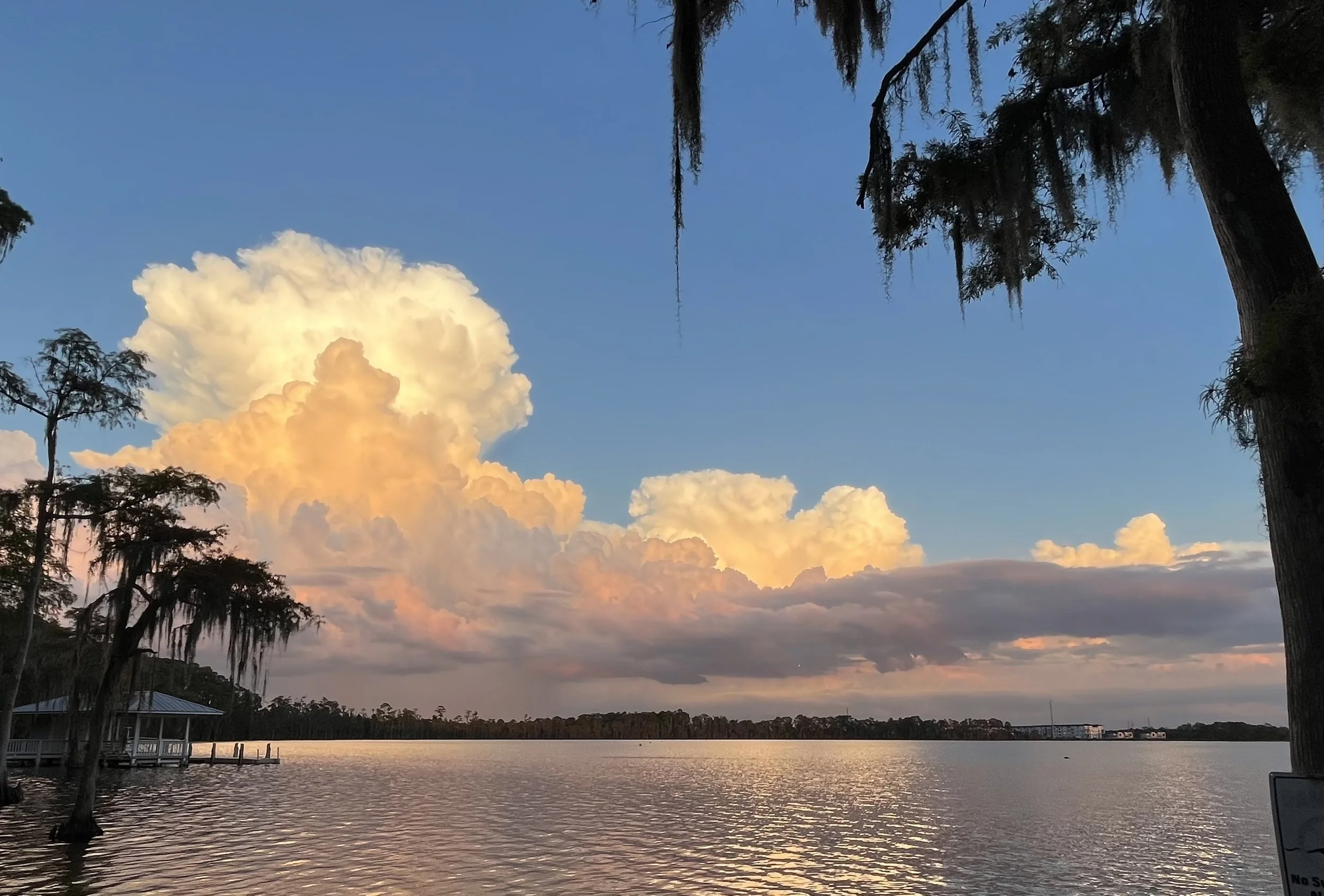
A picture of clouds over water in 2023. (Credit: CD Davidson-Hiers)
Q&A with FSU researcher Michael Diamond on clouds, climate uncertainty, and trade-offs in climate solutions
Clouds are among the most unpredictable variables in climate science. Whether they’re dark and heavy, signaling rain, or wisping across the blue sky, each cloud presents a different mystery to researchers.
The Florida State University Department of Earth, Ocean, and Atmospheric Science assistant professor Michael Diamond studies the interaction between clouds and atmospheric particles, called aerosols, and how that interaction impacts Earth’s climate.
In a sit-down interview with the News Watch, Diamond explained how cloud science helps fill this gap in climate research. This interview has been lightly edited for brevity and clarity.
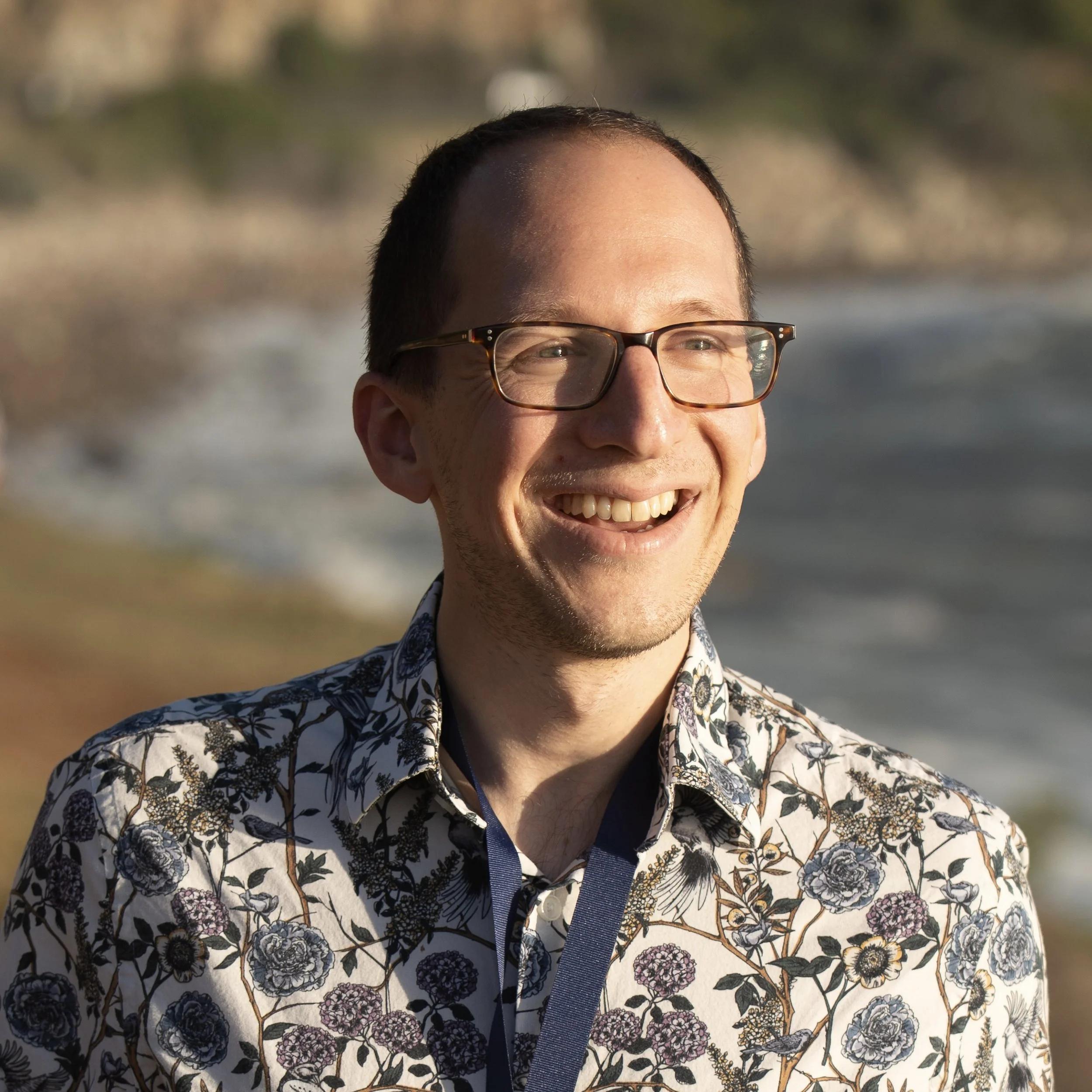
The Florida State University Department of Earth, Ocean, and Atmospheric Science assistant professor Michael Diamond studies the interaction between clouds and atmospheric particles, called aerosols, and how that interaction impacts Earth’s climate.
The changing of clouds
Q: Your research focuses on clouds being an uncertain factor in understanding climate change. Why are clouds such a major source of uncertainty in climate science, and what makes them so difficult to predict?
A: “Clouds are the single largest contributor of uncertainty in understanding how much human activities have already contributed to climate change,” Diamond said.
Unlike carbon dioxide, which he explained is really long-lived in the atmosphere, mixes really well around the globe, and whose effects are well understood, he described clouds as ephemeral and ever-changing. Clouds also interact with human-produced pollution particles in ways that “on average, tend to make clouds brighter than they would be otherwise.” This creates a cooling effect that partially offsets greenhouse gas warming. Scientists estimate that this cooling effect is about one third of the warming caused by greenhouse gases, but “the error bars on that one-third value are really large.”
The trade-off
Q: What does that uncertainty actually mean for climate change? Is it mainly a challenge for scientists trying to understand and predict future warming, or could it also influence how severe the impacts become?
A: “[It means] a couple of different things,” said Diamond. “The amount of warming we've seen so far isn't all of the warming that we would expect to get, even just from the greenhouse gases that are already in the atmosphere…We are trying to reduce the amount of particle pollution in the atmosphere.”
Particle pollution in the atmosphere is linked to negative cardiovascular and respiratory effects, including heart attacks, heart failure, and strokes, as well as asthma attacks, and increased coughing, wheezing, and shortness of breath.
“So, a lot of my research is actually focused on things like reducing the amount of sulfur in shipping fuel,” Diamond said. He noted China’s recent efforts to reduce sulfur pollution to improve air quality there as well. With these efforts, “we're emitting just as much greenhouse gases as before, but now we're not emitting the particles. That actually might be one of the reasons we've had a recent acceleration of warming because greenhouse gases have kept going up, but that particle pollution has flattened out or even started going down.”
Diamond referenced James Hansen, the NASA scientist famous for bringing global warming to national attention in 1988, who explained the phenomenon as what’s called a Faustian bargain. Named after Faust, the fictional character from a German legend who sells his soul to the devil in exchange for knowledge and power, the bargain here is between cleaner air and a temporary cooling effect.
“We accepted this cooling effect in exchange for these terrible air quality effects, and now we're getting the other side of that bargain, where as air quality is getting better, we get all of that warming,” Diamond said.
Dealing with uncertainty
Q: When you teach students about climate science and uncertainty, what reactions do you typically get from them?
A: Diamond teaches a graduate-level course called Navigating Climate Overshoot. The course explores the concept of climate overshoot, in which global temperatures temporarily exceed international targets such as 1.5°C before being brought back down through interventions such as carbon dioxide removal or sunlight reflection methods. Diamond encourages students to evaluate the potential benefits alongside the environmental, social, and ethical risks they may create.
“I think that's a really useful framework for students and thinking about everything with positives, negatives, and trade-offs,” Diamond said.
He said students often become more anxious when climate change is framed as an all-or-nothing challenge rather than a problem with a range of possible responses and outcomes.
“If society has all of these different goals that we're trying to meet simultaneously, what's the right mix of different things instead of just worrying about [if we’re] gonna hit [the 1.5 degrees Celsius of warming], are we gonna keep below it, or is the world doomed?... I think that binary, often, increases anxiety and is sometimes less useful than thinking about the next 0.1 degree Celsius of warming we can try to offset...”

A cumulus cloud from 2022. (Credit: CD Davidson-Hiers)
Q: Do you think scientific uncertainty can make people feel unsure about how to act on climate change
A: “I think so. I think this kind of uncertainty comes in, maybe two different flavors with this…There's the scientific uncertainty, that I kind of talked about before in terms of like the size of our error bars, or we could say things like, well, we think the overturning circulation in the Atlantic might slow down or might even collapse, and that would do all these terrible things. Or maybe it won't…One of the problems [is] we don't have 10 Earths that we could just do various experiments on. We do have climate models, which are our best representation of that within different computer systems, but those are all imperfect, as all models are imperfect…We can't say exactly if you emit this much CO2, these are the exact bad things that are going to happen. With that said, I think we understand enough from the science to know that [with] the amount of CO2 and other greenhouse gases we’re putting out, the climate changes [it] can cause are very likely to be dangerous…The two least likely outcomes are: it's totally fine, and it's the end of the world. But there's a big range of possibilities within that that we probably want to avoid…No one knows what the best answer is, I would say, because so much of it also depends on ideology and other competing priorities. There probably isn't an objectively right answer for what we should do, which maybe could free us a little bit from actually thinking we have to find the answer as opposed to saying, okay, well there's lots of things that could be worth doing.”
Q: How do you find peace in dealing with this difficult subject?
A: “I see myself as someone who's able to provide this kind of scientific expertise that can help inform different policy choices, but I want to be really cognizant about not imposing my own preferences onto that. So, I really want to be focused on my own work.”
Diamond said his role as a researcher allows him to understand the environmental consequences of different solutions while remaining professionally neutral.
“That's, in part, easier for me because I actually work on an area where I am fairly ambivalent about whether or not [implementing certain solutions] would be a good idea,” he said.
Diamond carries this mindset to his everyday choices.
“My general philosophy is: I actually don't think you need to, like, go all in. Better is better,” he said. “If you cut out some amount of beef or replace some amount of beef with chicken or some amount of chicken with veggies, et cetera, that's going to reduce greenhouse gases.”
He emphasized focusing on realistic, incremental changes rather than perfection.
“I tend to focus on the things I can do that move in the right direction and that are actually realistically attainable by most people,” he said. “What's the point in saving the world if you don't enjoy living in it?”
This story was initially edited by Gerald Witt and CD Davidson-Hiers.